21 September 2026
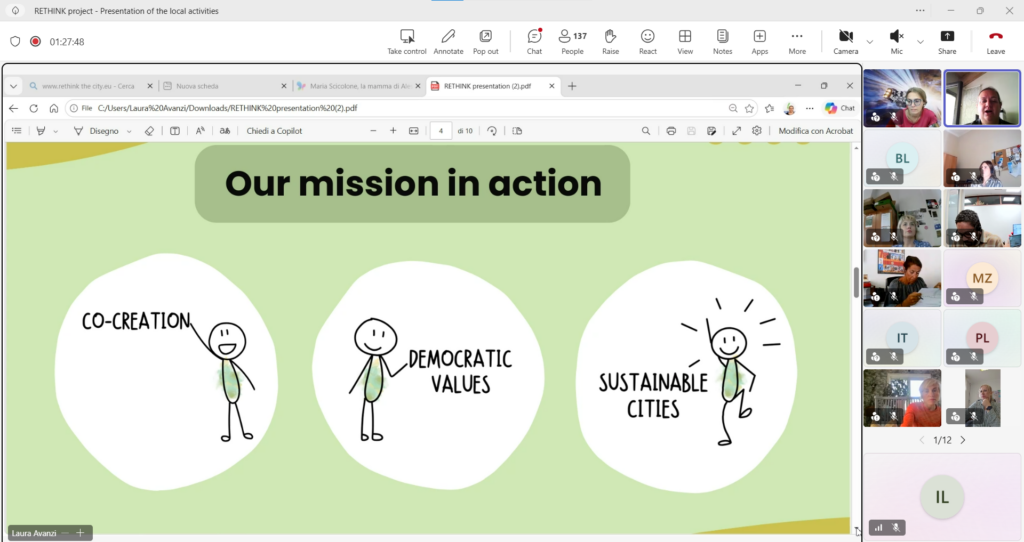
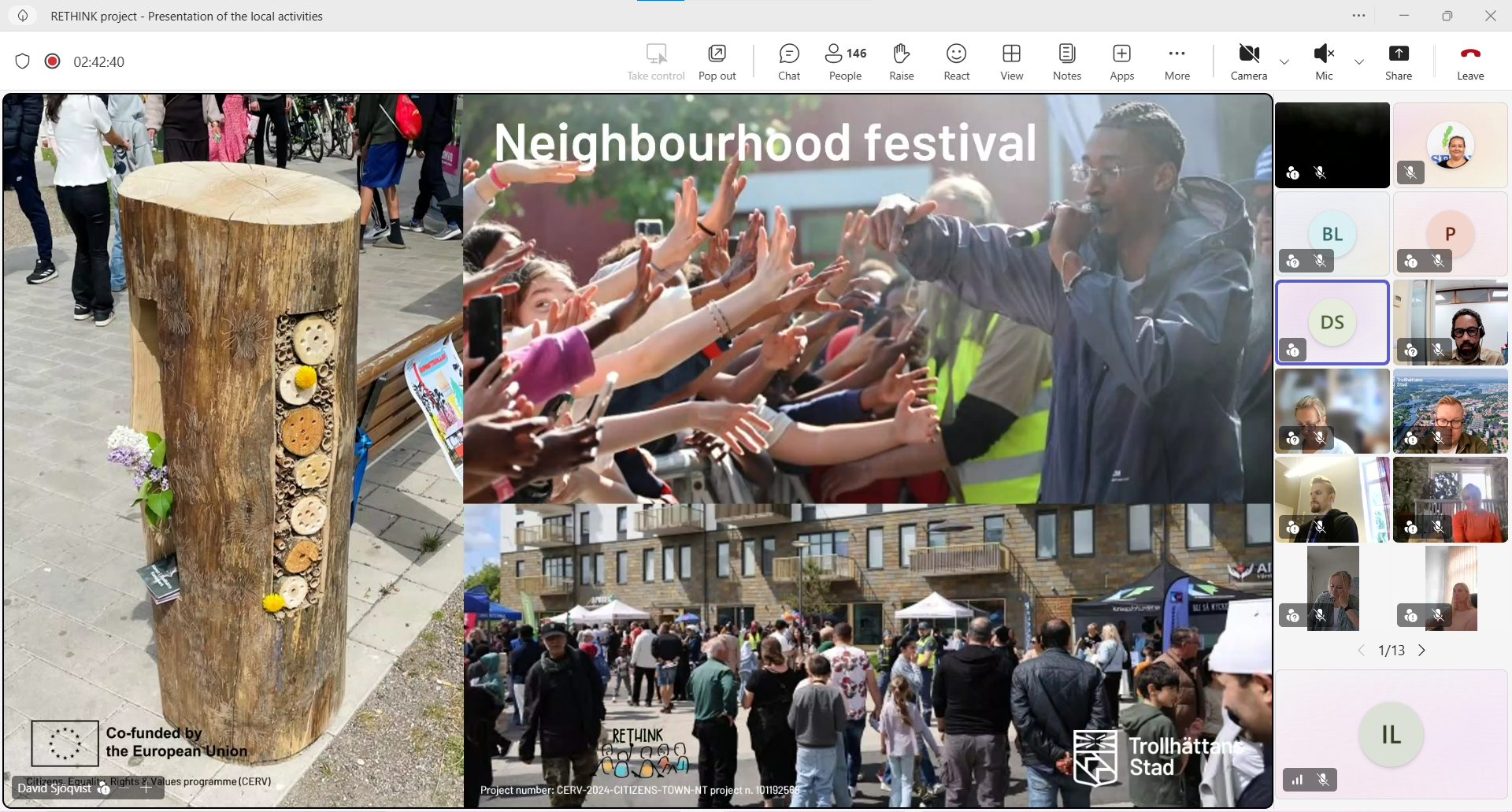
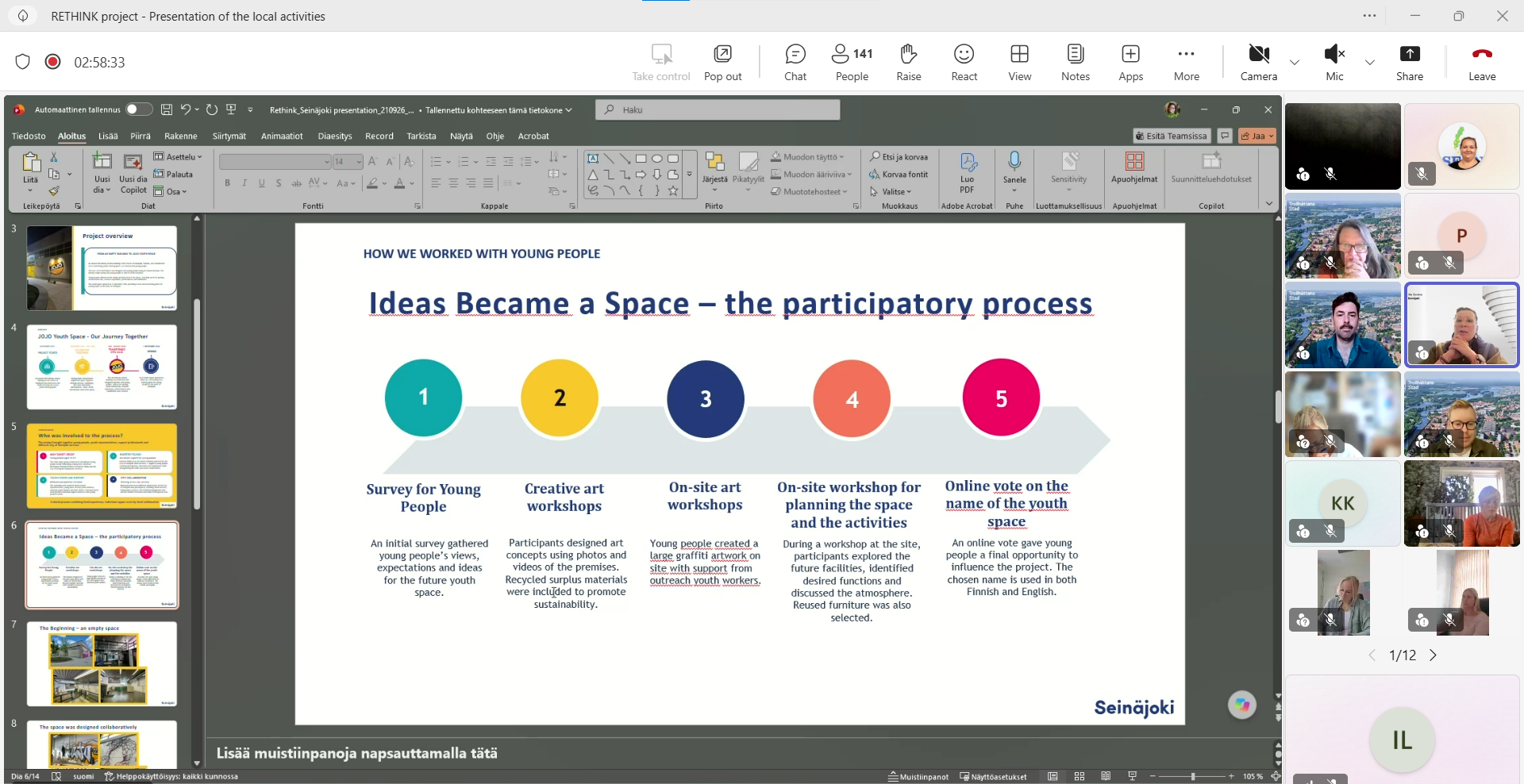
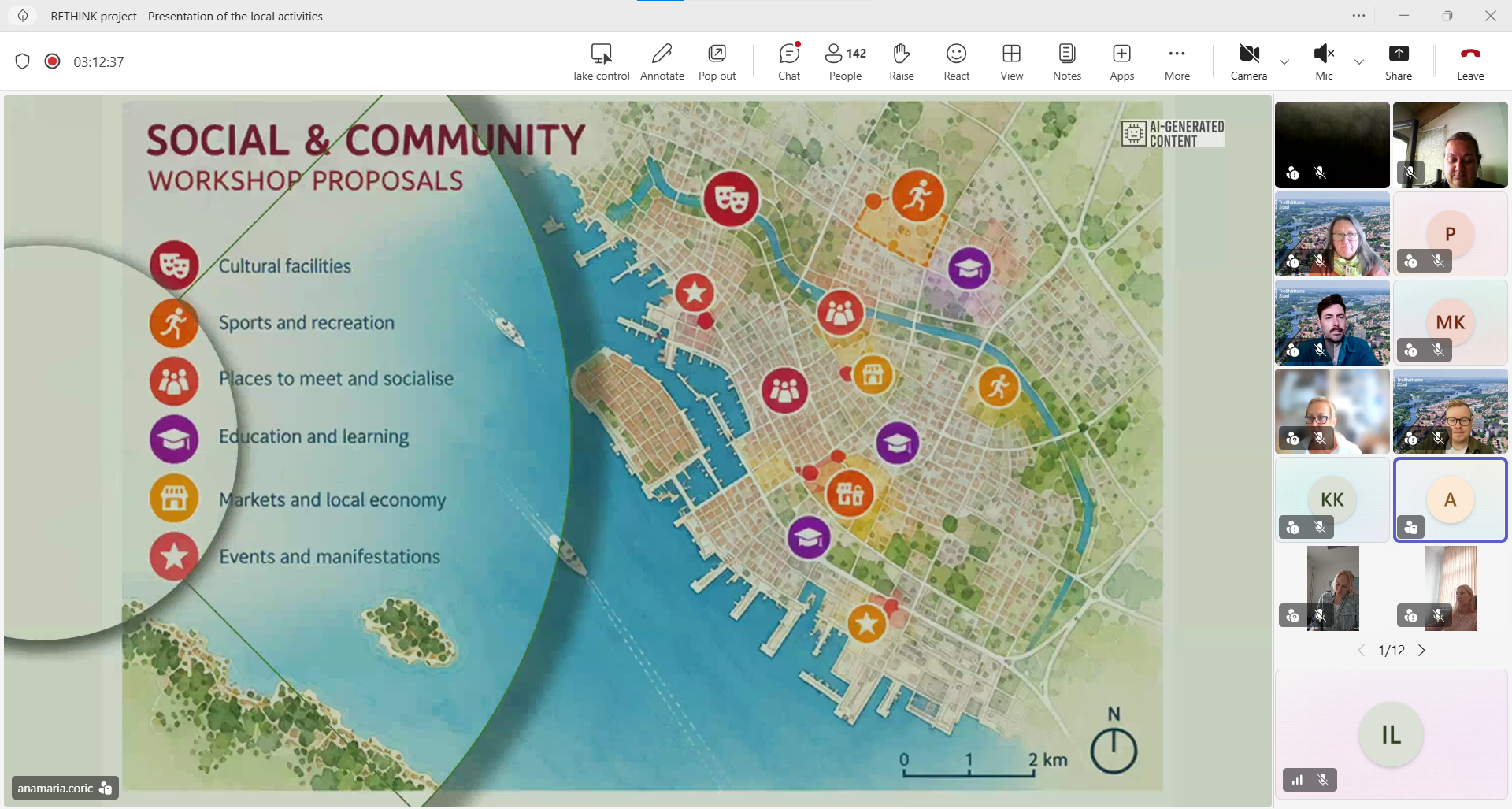
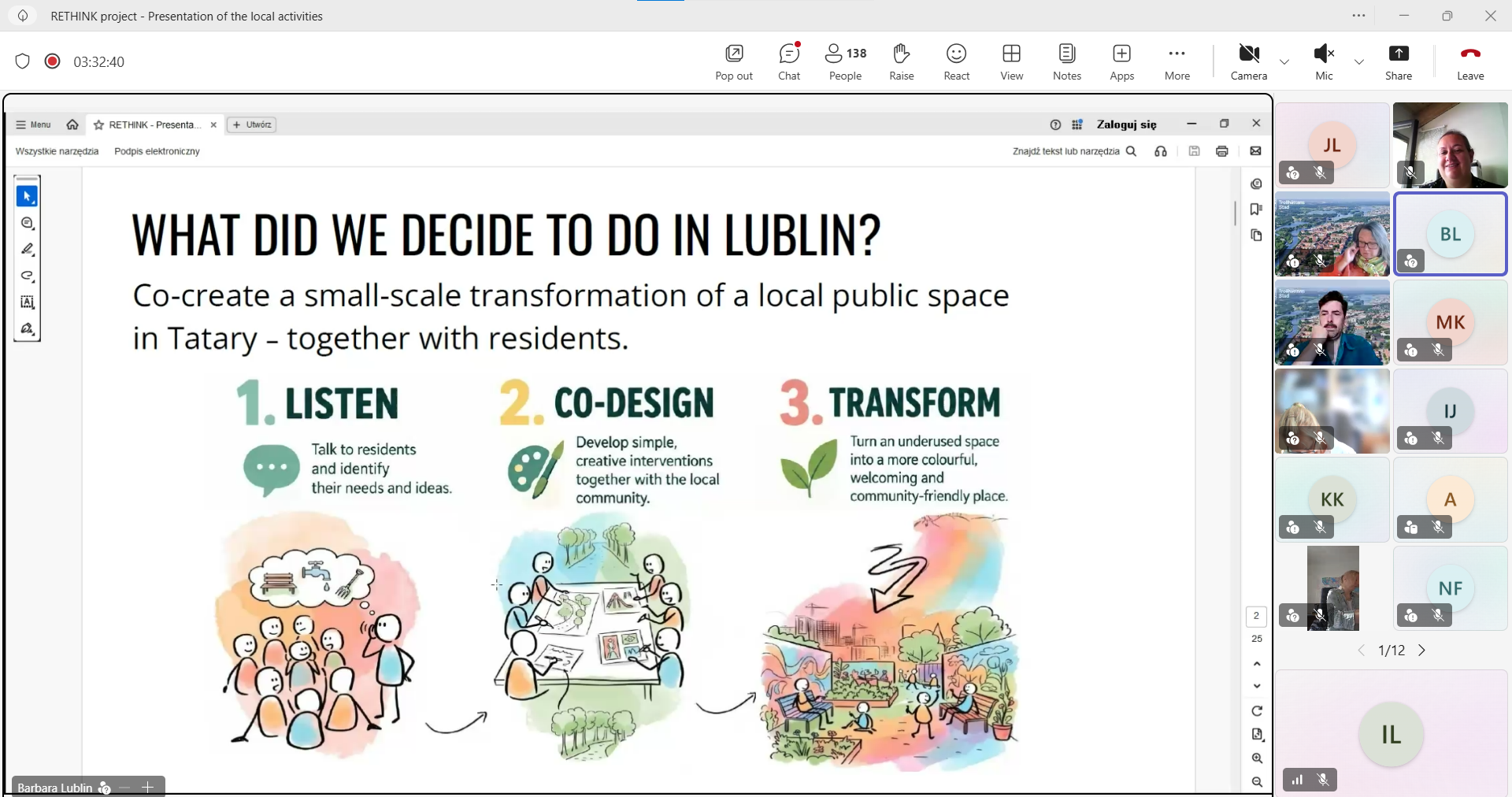
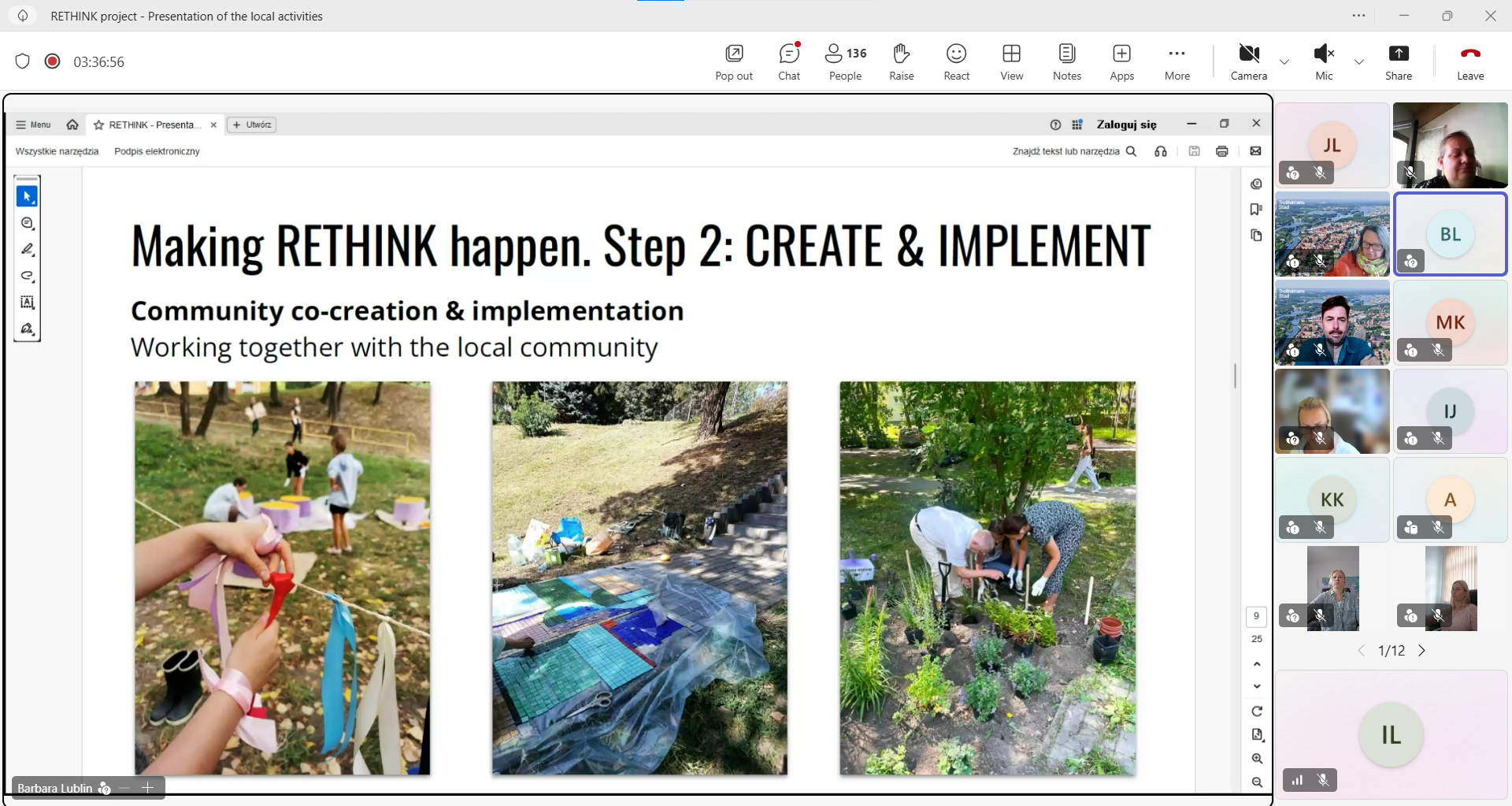
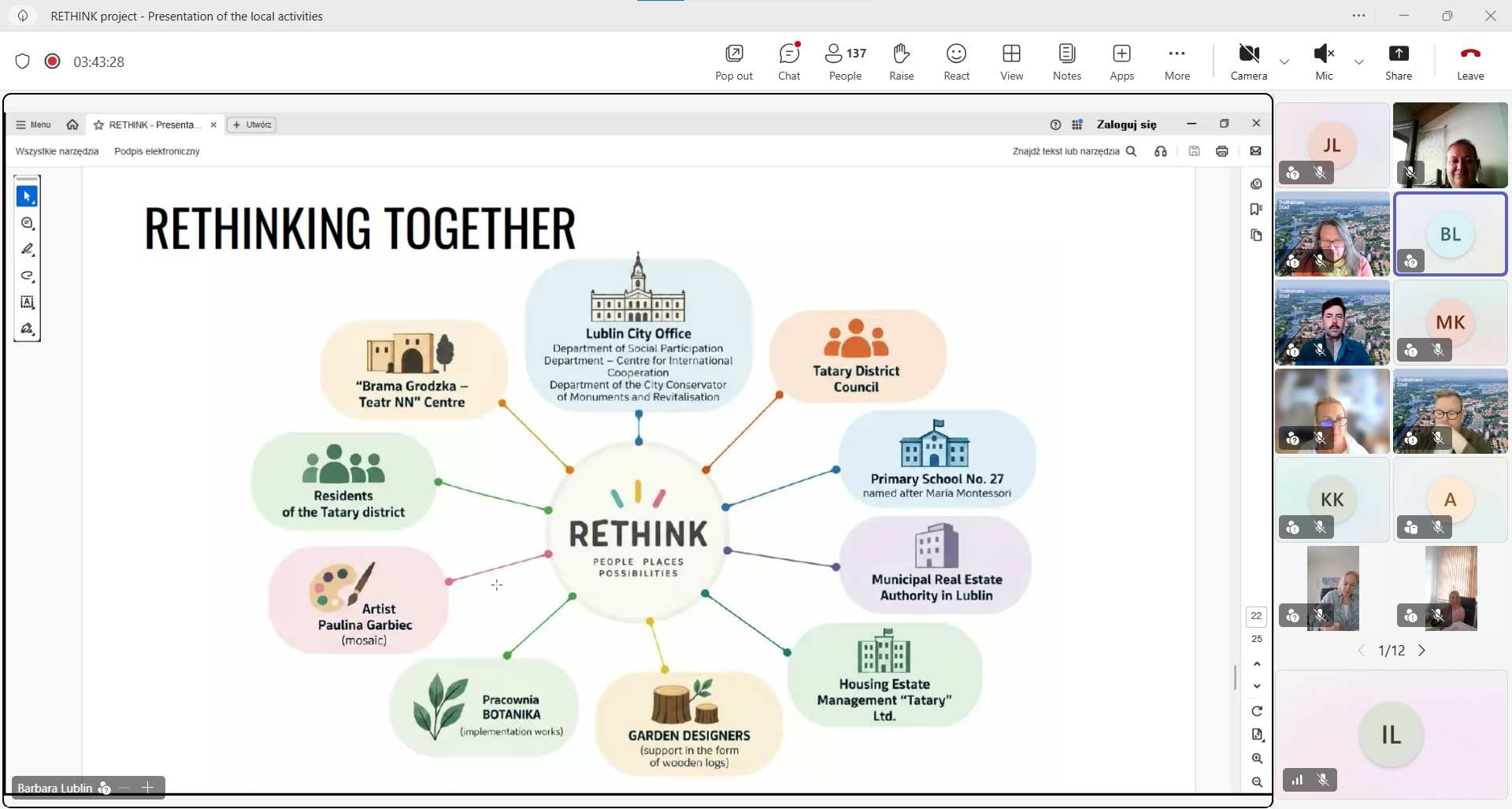
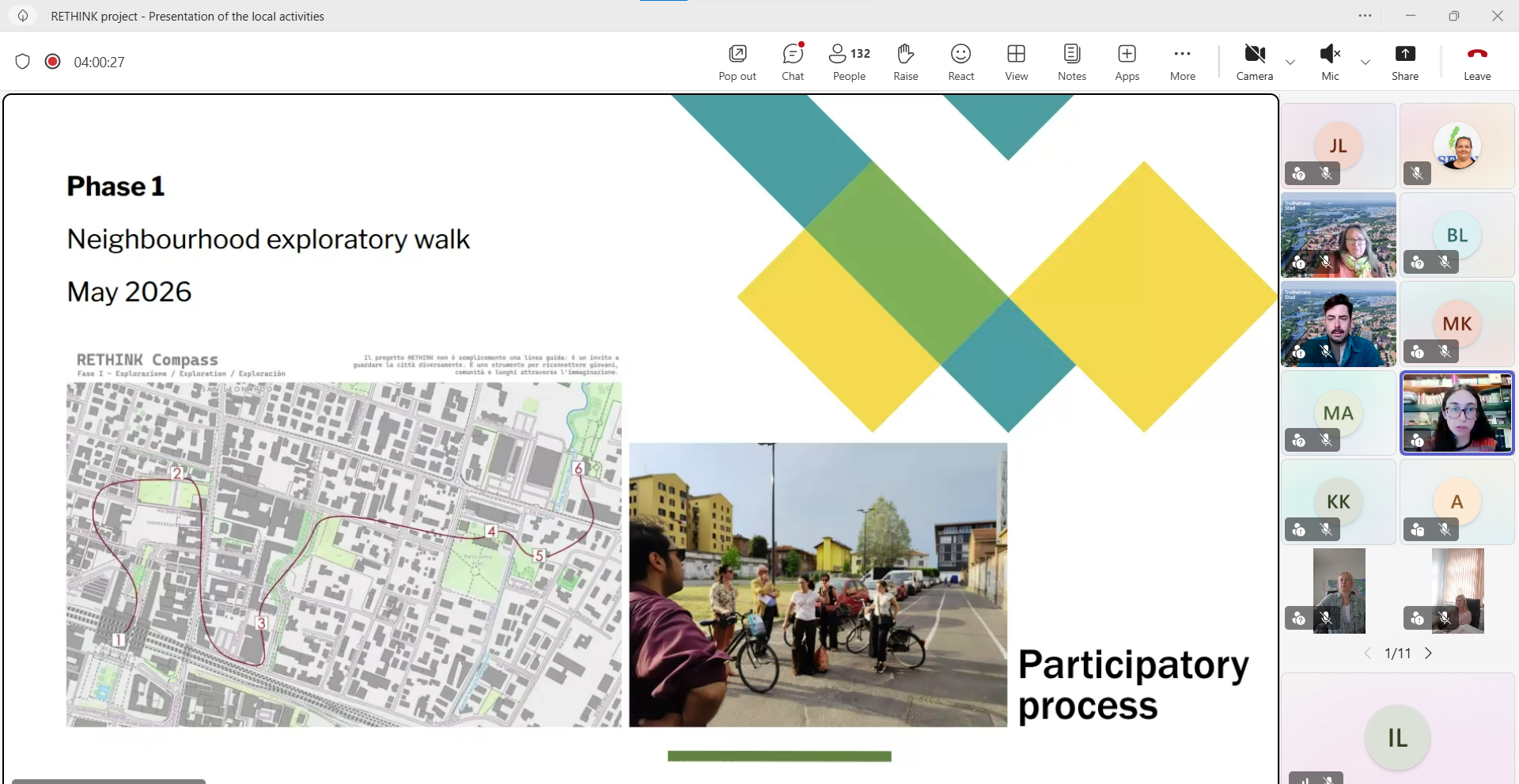
The online seminar was organised by the project partners to present the activities developed in the seven cities.
The seminar was divided into two main parts:
Background: project presentation and introduction to the main features of the New European Bauhaus (NEB).
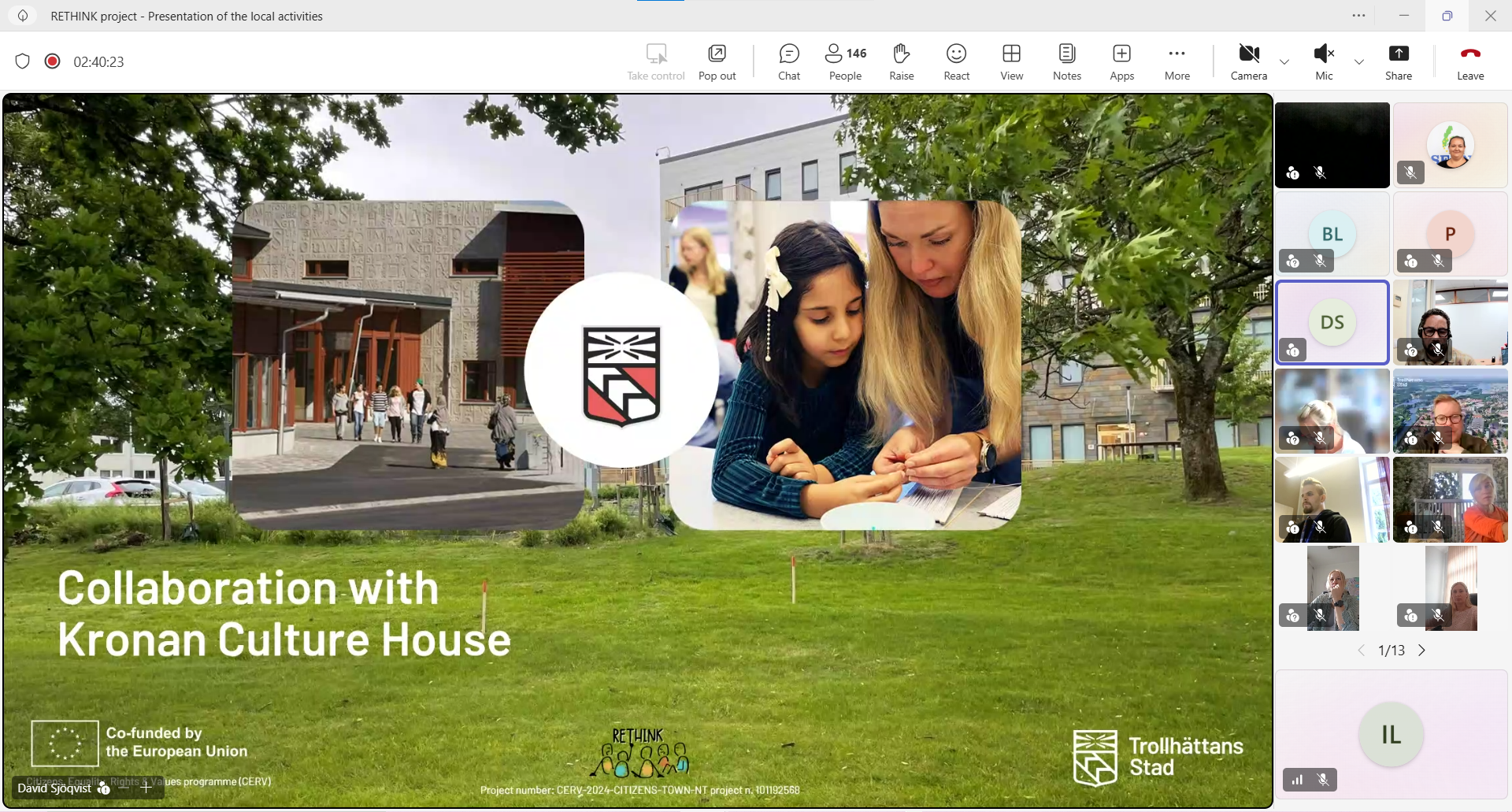
Local projects: presentations of the activities developed in the partner cities.
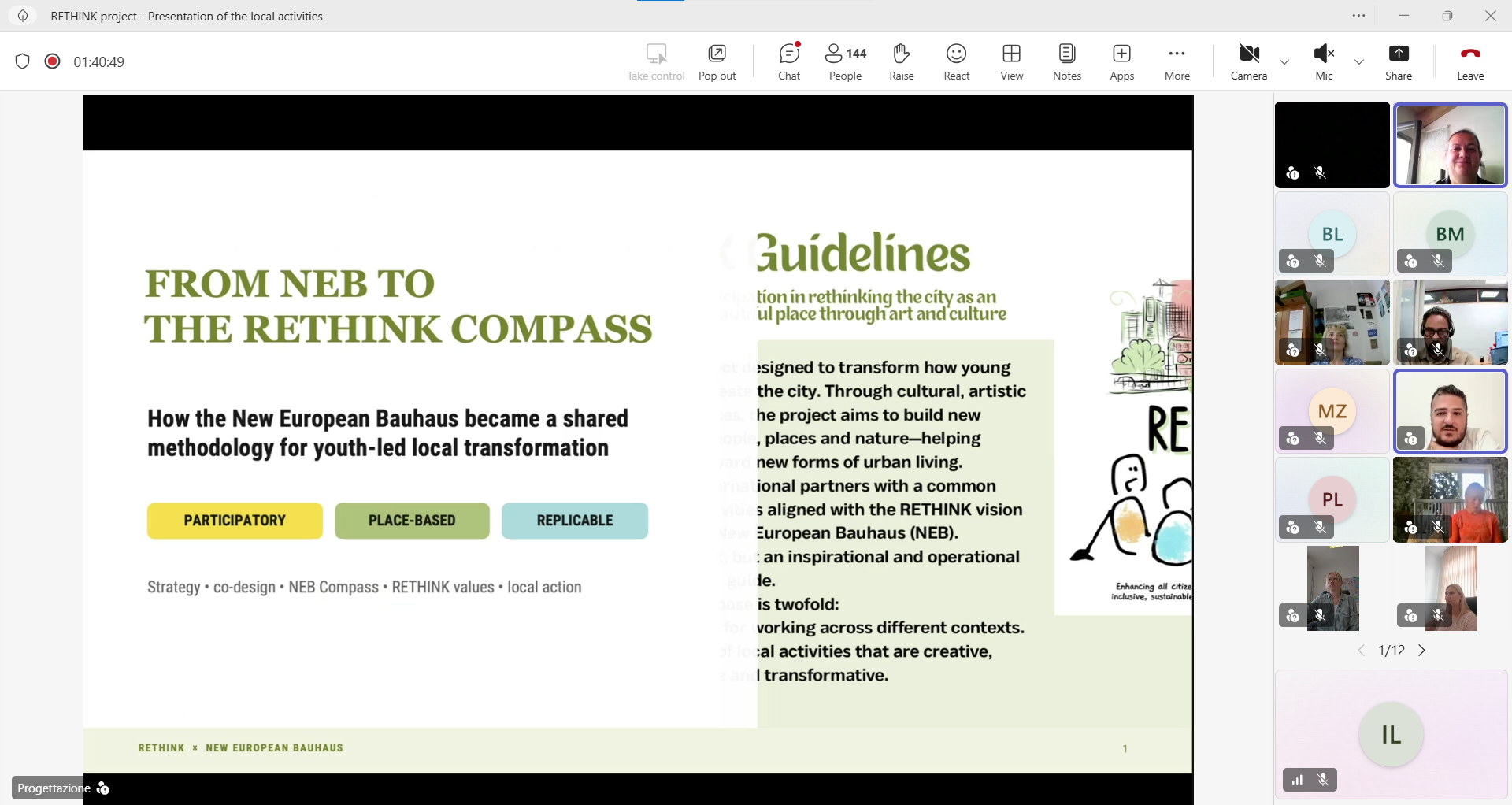
The NEB expert, Francesco Marchionni, introduced the main characteristics of the New European Bauhaus, focusing on their concrete application to the partners’ local projects within RETHINK.
The NEB starting point
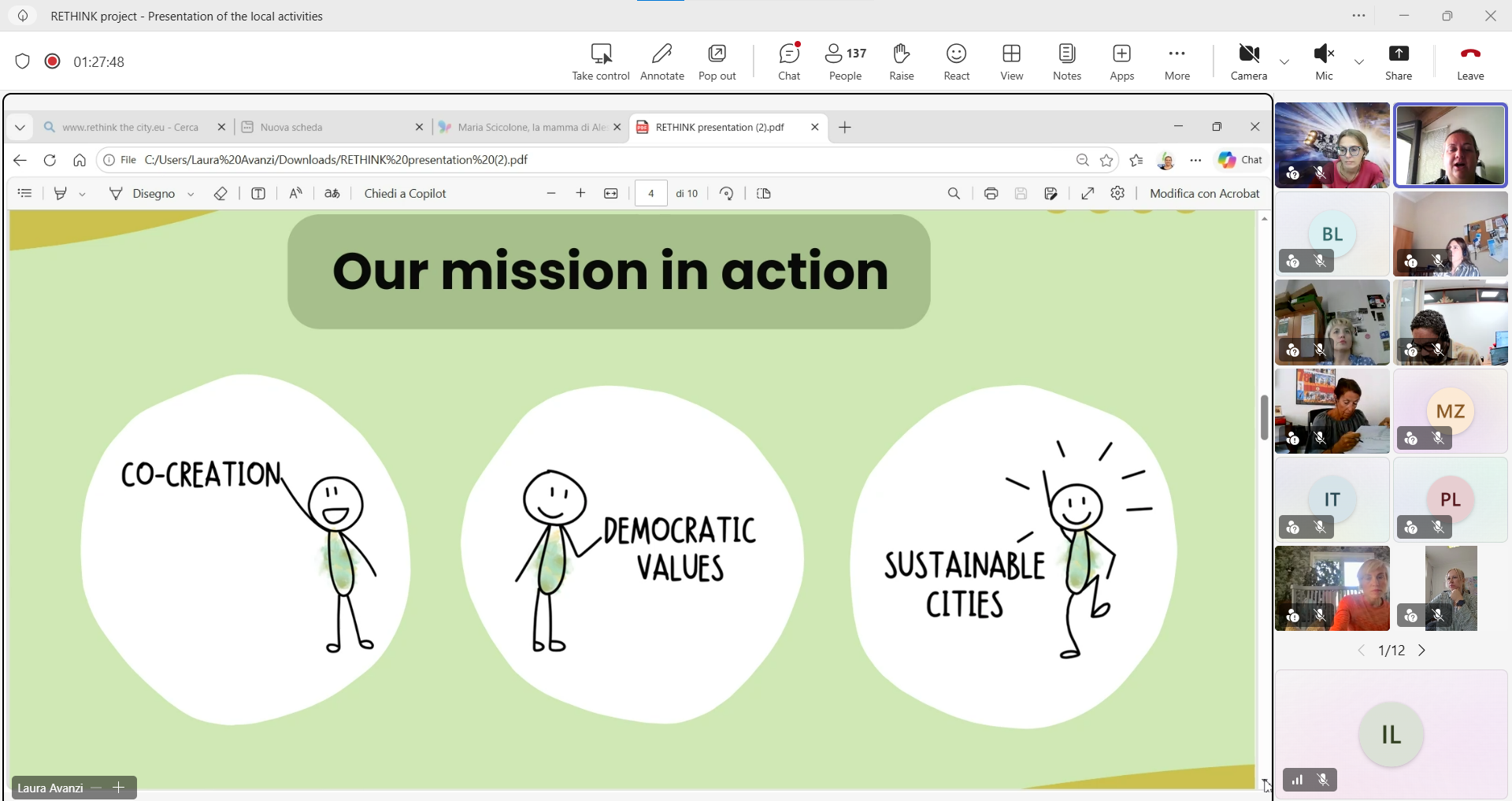
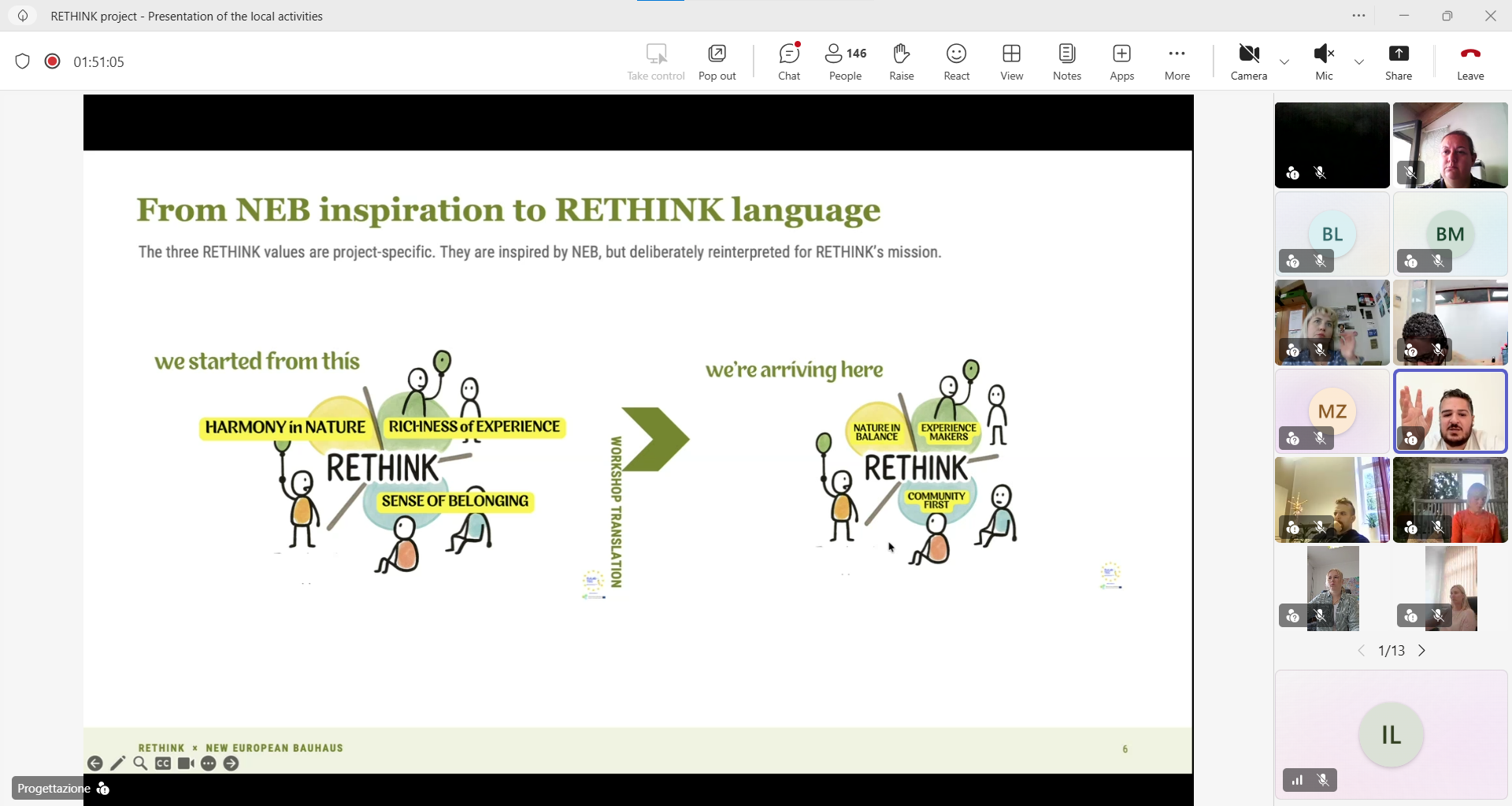
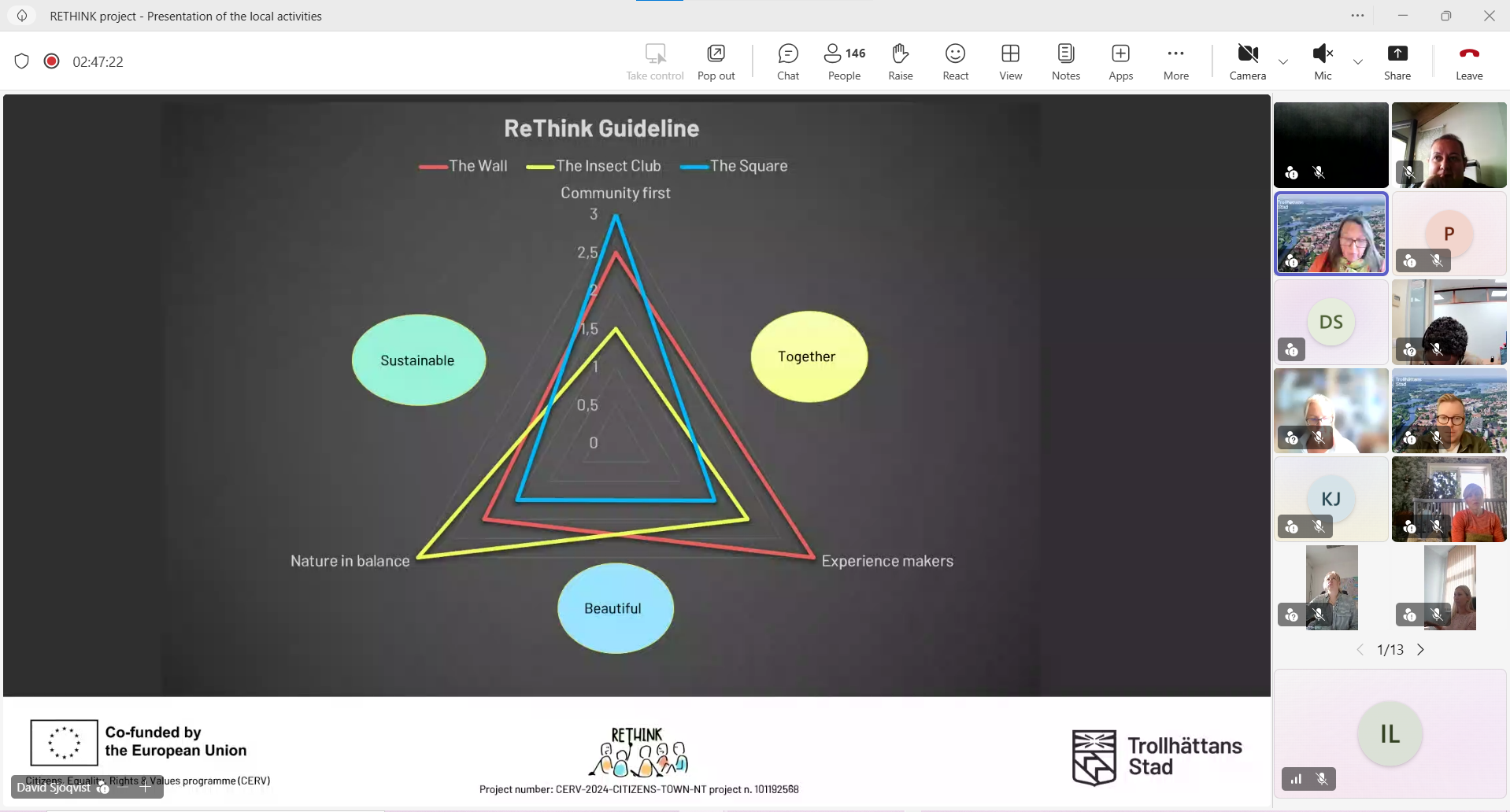
The NEB was presented as a European framework connecting what is built with how people experience change. It is based on three core values:
Beautiful: quality of experience, aesthetics and meaningful places, going beyond pure functionality.
Sustainable: climate goals, circularity, biodiversity and long-term thinking integrated into project design.
Together: inclusion, accessibility, affordability and change shaped with people rather than simply for them.
The NEB also establishes three key working principles: a participatory process, multi-level engagement and a transdisciplinary approach.
The strategy: adapt, do not copy
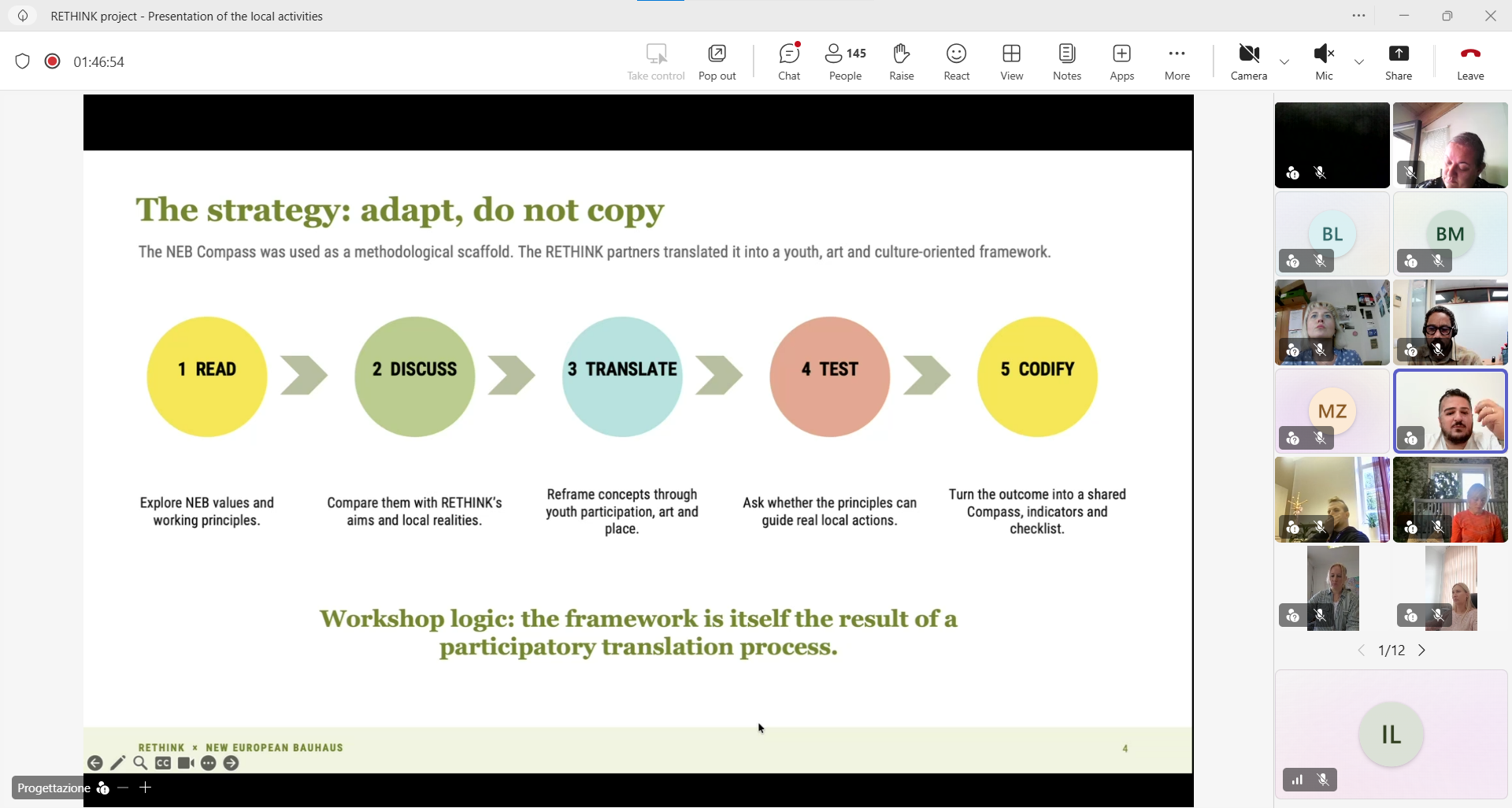
The partners used the NEB Compass as a methodological framework, adapting it to focus on youth, art and culture.
This process involved five steps:
Reading the NEB values and working principles.
Discussing them in relation to RETHINK’s objectives and local contexts.
Translating the concepts through the lenses of youth participation, art and place.
Testing whether the principles could guide concrete local actions.
Bringing the results together in a shared Compass, including indicators and a checklist.
The key point is that the framework was not simply adopted from the NEB Compass. It emerged from a participatory process of interpretation and adaptation carried out through workshops.
Participation as the project logic
Participation was presented as the underlying logic of the entire project, guiding both the development of the Compass and the implementation of local activities. It operates on three levels:
With young people: they are not treated as a generic audience. Partners identify specific groups, listen to their needs and involve them in shaping the place, the experience and the outcomes, mainly through emotional mapping.
With places: locations are not considered neutral settings. Their memories, perceptions, tensions and potential become part of the design process, while places are selected through a bottom-up approach.
With different forms of knowledge: artists, facilitators, communities and organisations each contribute their own expertise, reflecting the NEB’s transdisciplinary approach.
The process follows a common sequence: listen, map, co-create, make and reflect.
From Compass to local action
The shared methodology is translated into a five-step implementation cycle, followed by all project partners:
Explore: map youth groups, locations and the local community context.
Co-create: use emotional mapping, involve artists and facilitators, develop joint outputs and select locations through a bottom-up approach.
Design: plan materials, a care plan, inclusive communication, legacy and documentation.
Implement: carry out creative activities, monitor well-being and collect stories and evidence.
Share & learn: produce outputs, engage stakeholders, carry out self-assessment and plan follow-up activities.
Closing message
The approach can be summed up as: one cycle and three values, with multiple local interpretations.
This explains why the activities developed across the seven cities differ considerably in their content and implementation, while following the same shared methodology.